LSG LABS
Build around the work people actually need to do.
Good operational systems reflect the real movement of information and responsibility, rather than forcing teams into an abstract process.

01 — FLOW
Map the event, owner and hand-off.
Make the real movement of work visible across teams and tools before changing the platform that supports it.
- Event-led workflow map
- Named ownership
- Explicit hand-off points
02 — STATE
Make workflow state visible everywhere.
Give people a shared view of what has happened, what is waiting and what needs intervention, without forcing a new way of working.
- Shared operational record
- Current status in context
- Connected existing tools
03 — EXCEPTIONS
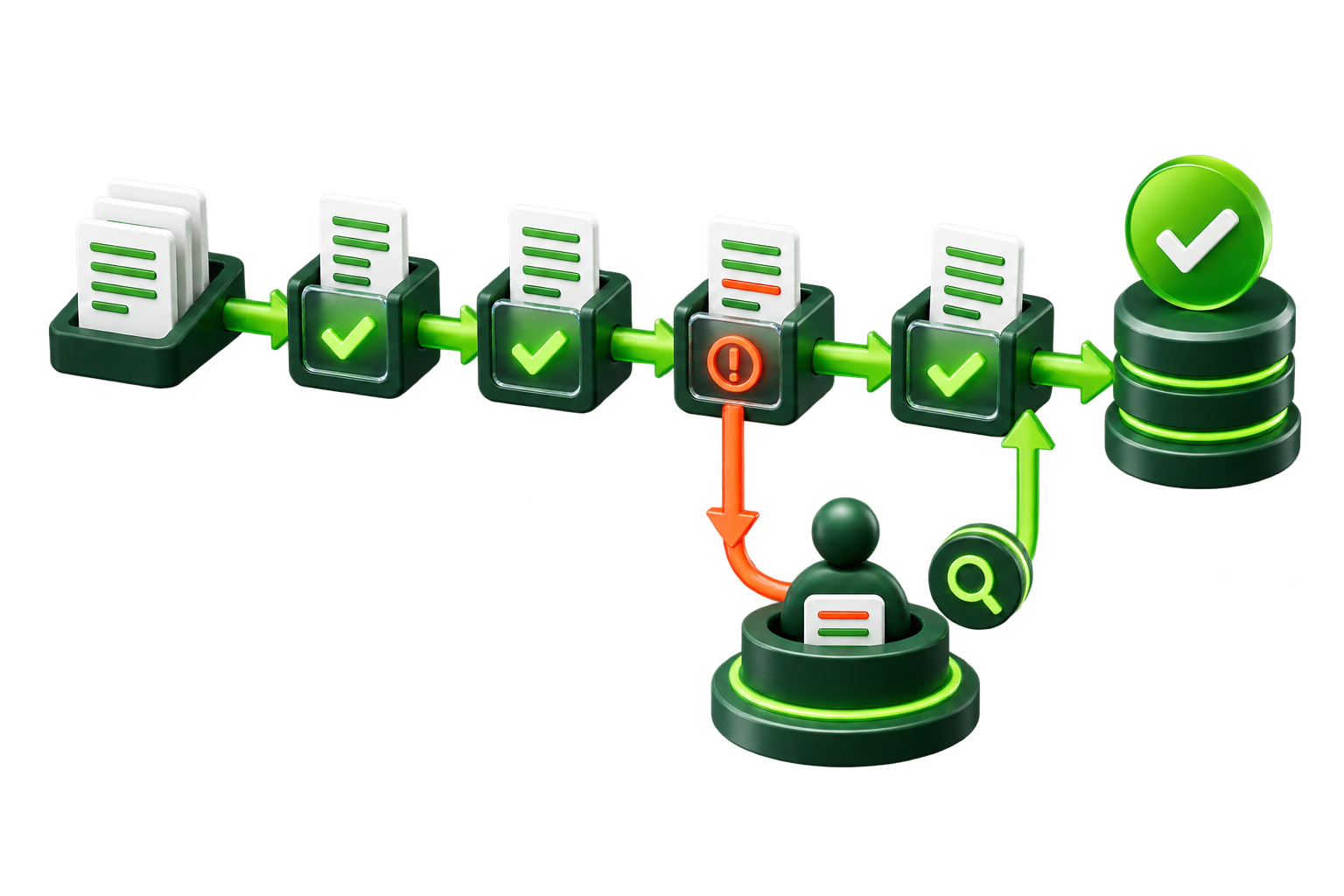
Design the exception path before scale.
Treat exceptions as first-class workflow states with clear routes, accountable decisions and evidence that survives the hand-off.
- Defined exception states
- Practical escalation routes
- Decision history retained
04 — DECISIONS
Connect operations to the next decision.
Turn live operational evidence into a dependable basis for action, improvement and governance across the platform.
- Evidence-led actions
- Measured workflow health
- Continuous operational learning